
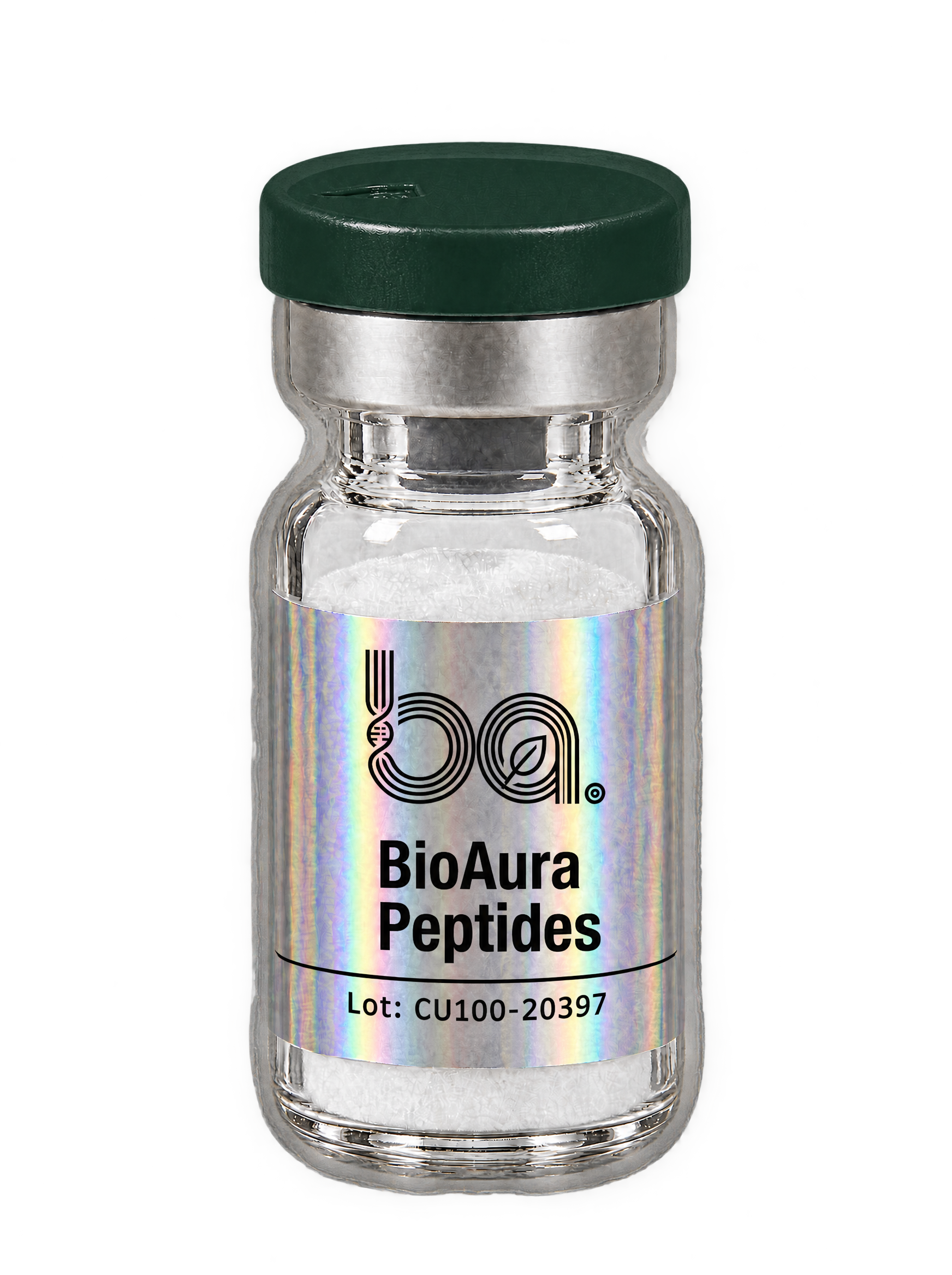
BPC-157 20mg Research Peptide
A synthetic pentadecapeptide studied for tissue repair and recovery in preclinical models.
Select Strength
For Research Use Only
What is BPC-157?
BPC-157 is a synthetic 15-amino-acid peptide derived from a protective protein identified in human gastric juice, studied in preclinical research for its potential influence on tissue repair and recovery pathways.
- Research Category
- Recovery & Repair
- Form
- Lyophilized peptide
- Amino Acids
- 15
- CAS Number
- 137525-51-0
- Purity
- >99%
- Origin
- USA
- Intended Use
- Laboratory Research
BPC-157 at a Glance
BPC-157 Research
BPC-157 (Body Protection Compound-157) is a synthetic pentadecapeptide derived from a sequence identified within a protective protein found in human gastric juice. It has attracted research interest for its potential influence on tissue repair and recovery processes in laboratory models.
Preclinical studies have investigated BPC-157 in the context of angiogenesis, tendon-to-bone healing, and gastrointestinal integrity. In vitro research has examined its effects on cell migration and signaling pathways relevant to tissue repair.
The precise mechanism by which BPC-157 may influence these pathways remains under investigation. Most reported findings derive from animal models or in vitro work; robust human clinical evidence remains limited, and BPC-157 has not been approved as a treatment for any condition.
What is BPC-157 being studied for?
Tissue Response & Repair
Investigated in preclinical models for its potential influence on tissue repair and structural recovery pathways.
ExploreGastrointestinal Integrity
Studied in the context of gastric mucosal integrity and related laboratory models.
ExploreAngiogenesis Research
In vitro research has examined potential effects on blood vessel formation in laboratory settings.
ExploreHow is BPC-157 studied?
Research has examined several proposed mechanisms, though the precise mode of action remains under investigation.
BPC-157
Synthetic 15-amino-acid peptide
Proposed Cellular Targets
Signaling pathways examined in vitro
Tissue Repair Pathways
Investigated in preclinical models
Research Area
Recovery & Repair
Proposed mechanisms are based on preclinical research and have not been confirmed as established pathways in humans.
Understanding the BPC-157 Research
In Vitro
Laboratory and cellular research has examined BPC-157 effects on cell migration and signaling relevant to tissue repair.
Preclinical
Animal-model studies have investigated potential effects on tissue repair, angiogenesis, and gastrointestinal integrity.
Human Research
Robust human clinical research remains limited. Available information is insufficient to establish clinical outcomes.
Regulatory Status
BPC-157 has not been approved by the FDA as a treatment for any condition. Sold for research use only.
Research starts with quality.
BioAura compounds are produced in the USA with batch-specific analytical testing. Every detail is built around a higher standard — from synthesis and purification to documented verification.
Know what you're researching.
Identity
Confirms the compound matches its expected structure.
BPC-157 Storage & Handling
Lyophilized Storage
Store lyophilized peptide at room temperature away from UV light
Temperature
Store at 65–75°F when lyophilized
Light Exposure
Protect from prolonged light exposure
Reconstituted
Store refrigerated at 36–42°F
For laboratory research handling only. Not human dosing or clinical guidance.
Continue exploring.
Research & Sources
- 01
Sikiric P, et al. Brain-gut axis and pentadecapeptide BPC 157: theoretical and practical implications.
Sikiric P, et al. · Current Neuropharmacology · 2016
PubMed-indexed literature
This product is sold for research use only and is not intended for human consumption, medical diagnosis, or treatment. These products have not been evaluated by the FDA. Statements are for research and educational purposes and do not constitute medical advice. BioAura does not make disease-treatment, therapeutic, or human-use claims.